Essays
A collection of reflections shaped by curiosity, conviction, and care. Written for those navigating faith, culture, nature, and meaning in a world that’s always in motion.
In a world threatened by drought, fire, and soil erosion both literal and metaphorical, we are working together here to create a healthier ecosystem of thought and reflection.
“Ha ha. Anyway, I’m OK. Actually, I’m in a better place now, you know? Having ‘Angel At Large’ status for a while isn’t so bad."
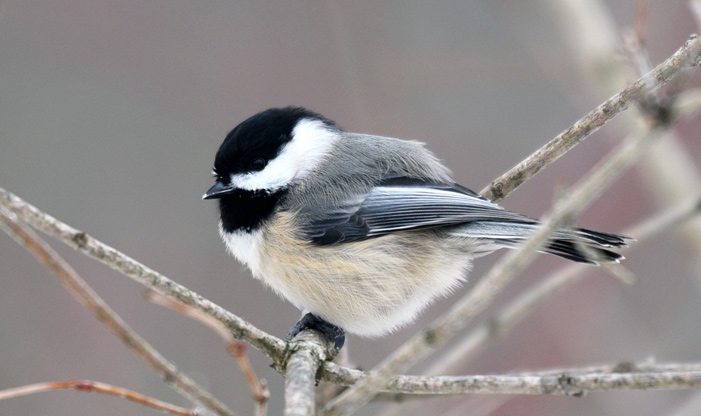
I was right on top of her, taking down the platform feeder, when I finally noticed the tiny chickadee struggling frantically. She was caught in the tangle of netting and wire I had foolishly bunched on top of the squirrel baffle.
If we think of the church as a garden—or maybe a vineyard, to be more in keeping with Jesus’ kingdom parables—that would suggest that we need to keep after the weeds. If we want to bear fruit and continue to cultivate healthy soil, well, some plants just don’t help. They take up nutrients and space that could be going toward the good fruit. The invasive ones become aggressive and can easily take over the whole garden if left to their own devices.
We can attempt to answer that question any number of ways, but sociology can offer some helpful insights. I read Notre Dame sociologist Christian Smith’s new book, Why Religion Went Obsolete, earlier this summer, and I found it breathtakingly explanatory for much of what I’ve witnessed in my own experience across the past six decades.
Fortunately, the sociological literature on hope is a growing field. Can a bunch of sociologists offer us some insight on hope? I was recently part of a lively conversation in which we tried to figure that out.
We are becoming merely homo phagon—humans who consume, from the Greek phago, to devour. We are all mouth.
Of course, things could be worse. You could find yourself in a frightening blank nothingness in which you can’t find any WiFi. You might have fallen into a cyberabyss. It’s a cyberabysmal place to be. You might describe yourself as webvexed.
Even if we build various systems and institutions to help us do that lamb-feeding work, every day is still, in essence, an exercise in coming to the beach needy and longing and empty, and finding that Jesus is already there, coals ready, showing us how to find abundance in ways we could not possibly rustle up ourselves. We have no strength to feed others until Jesus feeds us first.
Domination and destruction are easy and cruel. Serving, building, creating: that takes humility, which is true strength. So how can we provide a counter-narrative in which we reclaim for men the fundamental wisdom of Christianity: the truly strong are the ones who humble themselves and serve others.
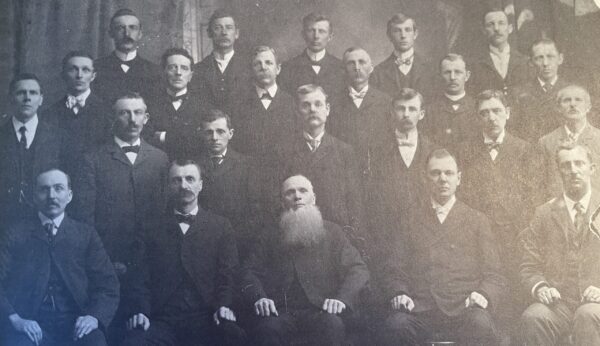
This is the commemorative hundredth-anniversary book for Alpine Avenue Christian Reformed Church, the church in which I grew up. The anniversary occurred in 1981 when I was not quite sixteen years old, and I admit I’ve lugged this book around all my life but not actually read through it—until last Sunday.
The soup is nothing but beans, veggie broth, and vegetables. OK, there’s a little salt. I say it’s virtuous not with pride but with a sigh. We’re talking Lenten sorts of virtue here. Is it a little boring? Yes. Is it really perfectly virtuous? Of course not. Nothing is. Come on, I’m a Calvinist, and we’re still talking about a food system full of injustices, etc. But the soup tastes pretty good, it’s better for me than a lot of other options, and I don’t really need lunch to be exciting.

Come to think of it, Miss P proposes instead that Canada take over the US. All the US states could become nice Canadian provinces, and we could simply sweep away our current US federal government. Done! All the illegally fired US civil servants and government scientists could be re-hired by the new United States of Canada.
The news media reports on all this, of course, so our little brains are filled with the ugliest discourse-sludge. Here’s my point: the discourse itself is purposely traumatizing.
Hamnet: Quiet Grief, Sentimental Speculation